
A Short History of Kimono
12/10/20252 min read
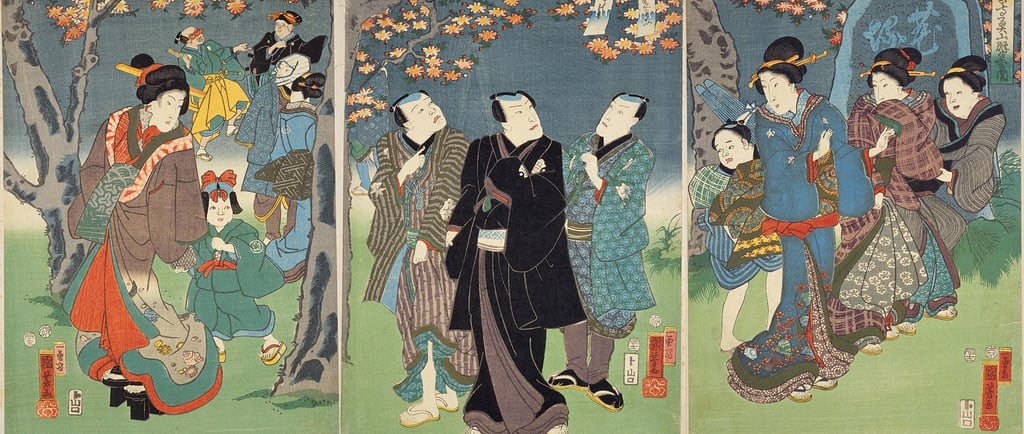
The word "kimono" literally means clothing, but the form we are familiar with started appearing around Heian period 794 ~ 1185, and it went through many small changes as it was worn by Japanese people every day.
Men & Women in Kimono, from Woodblock Triptych Print 浅草寺奥山群集の図 by Utagawa Kuniyoshi 1856

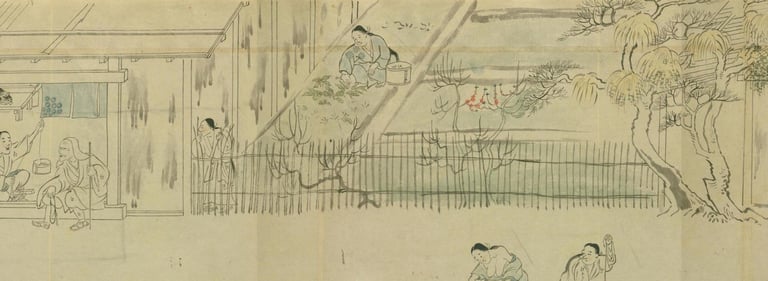
Local Machiya in Heian Period, artist unknown. Civilians at this period were still wearing 2-piece clothing, not "kimono" as we know it today.
What is now known as "kimono" used to be an undergarment of nobles' costume known as Juni-Hitoe in Heian era. It's the same as T-shirt which was worn as undergarment in the late 19th century. I guess going out in leggings and crop top is part of this trend tendency?
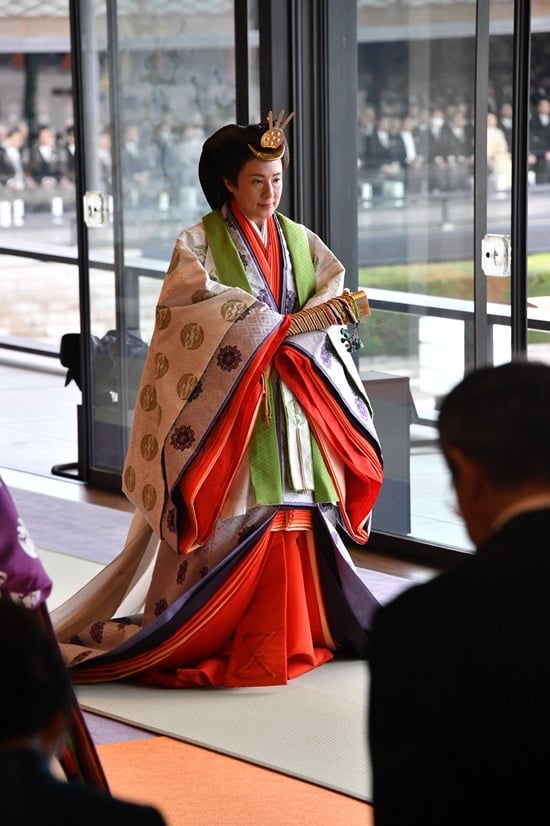
Empress Masako wearing Jyūnihitoe, Source:https://www.la.us.emb-japan.go.jp/itpr_ja/Sokuinorei.html
Most common material used for Kimono was silk, cotton, hemp and wool. As Kimonos are made by cutting and sewing in straight lines, basically piecing together rectangular sheets of fabric, people started to be creative with materials and layering depending on the seasons and occasions. This is when the difference between court nobles and general public started to show in their Kimonos.
After the Japan's isolation period of 215 years! (1639-1854), Japan was rapidly exposed to European influences, and the government even ordered its officials and military personnel to wear western clothing in formal occasions.


Women in various outfits. Woodblock print titled "Gensei kajin shû" (Beautiful Women of the Present Day) by Yōshū Chikanobu (1890)
Since about 130 years ago, Japanese people stopped wearing Kimonos daily and started wearing European style clothing. They still wear Kimonos for formal occasions, or special events as more of a dressing up opportunity.


A 7-year-old girl dressed up in Kimono for 7-5-3 celebration. Photo by Miki Yoshihito
Stay in the Know
Keep up to date with new events and blogs.
CONTACT US
hello.kimono.komono@gmail.com