
Patterns on Kimonos and Their Meanings
8/27/20254 min read
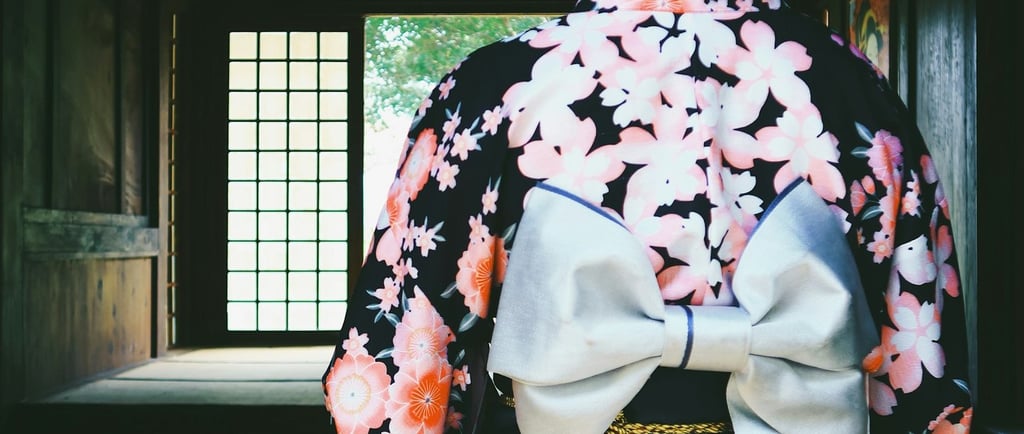
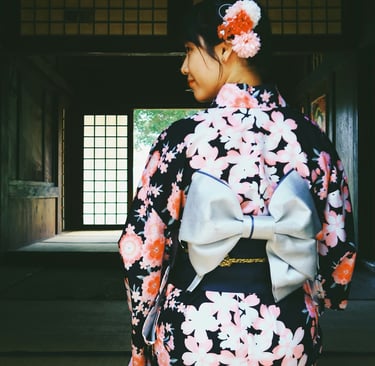
Patterns on Kimonos varies greatly from simple to lavish, depicting flora, fauna, items from every day lives, and geometric shapes. Japanese people may not be particularly religious, but they are generally spiritual and superstitious. The beautiful Kimonos are adorned not only with decorative patterns, but most of them have meanings. Here are some we see often, and what they mean.
Cherry Blossom -Sakura
Cherry blossom is one of (the other being chrysanthemum) national flower of Japan. There are many depiction of Sakura on Kimonos and it signifies beginnings.
Chrysanthemum -Kiku
Another of national flowers of Japan. Chrysanthemums have medicinal properties and were once used as medicine. It signifies perpetual youth and longevity, integrity, and virtue.
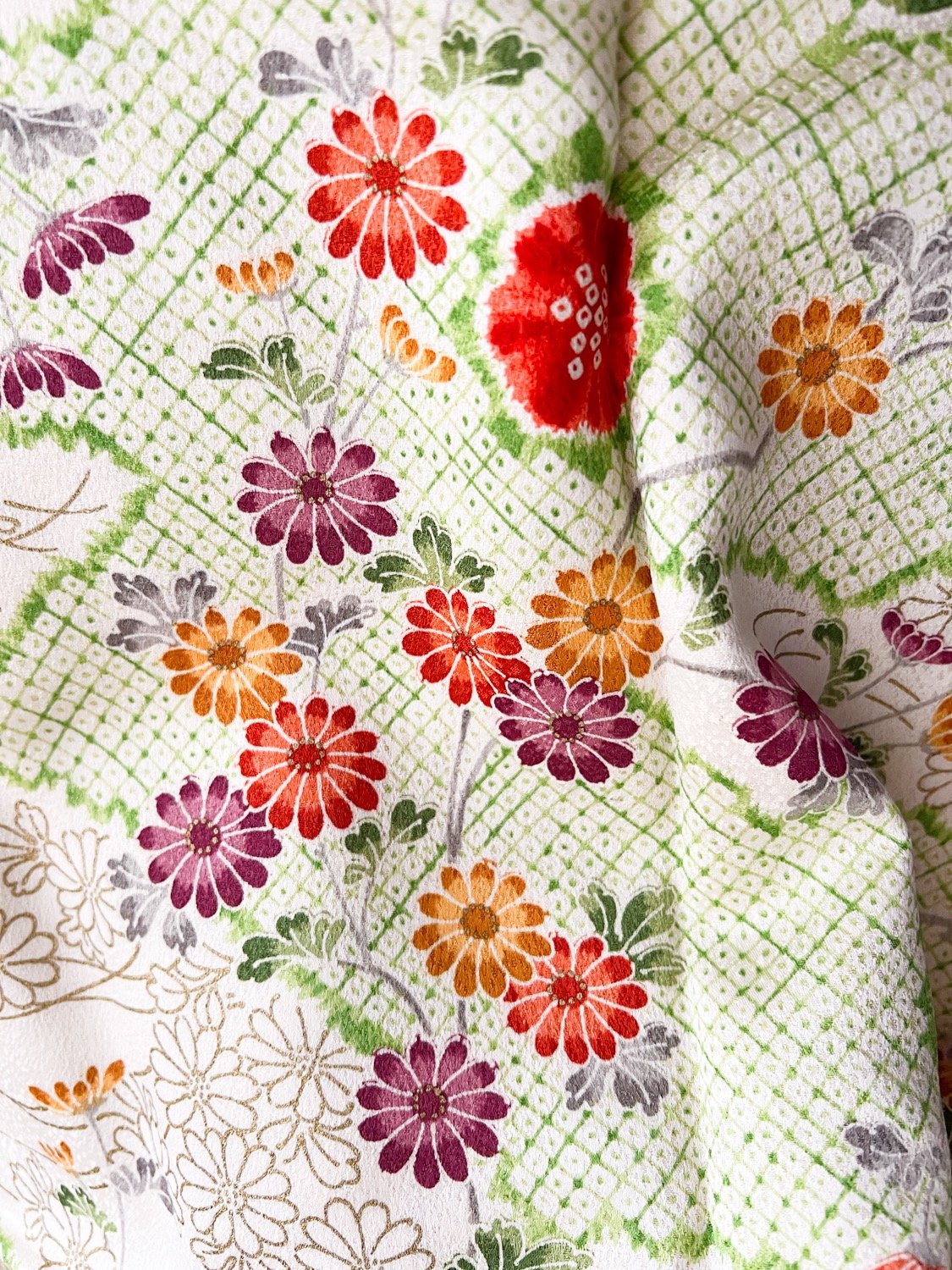
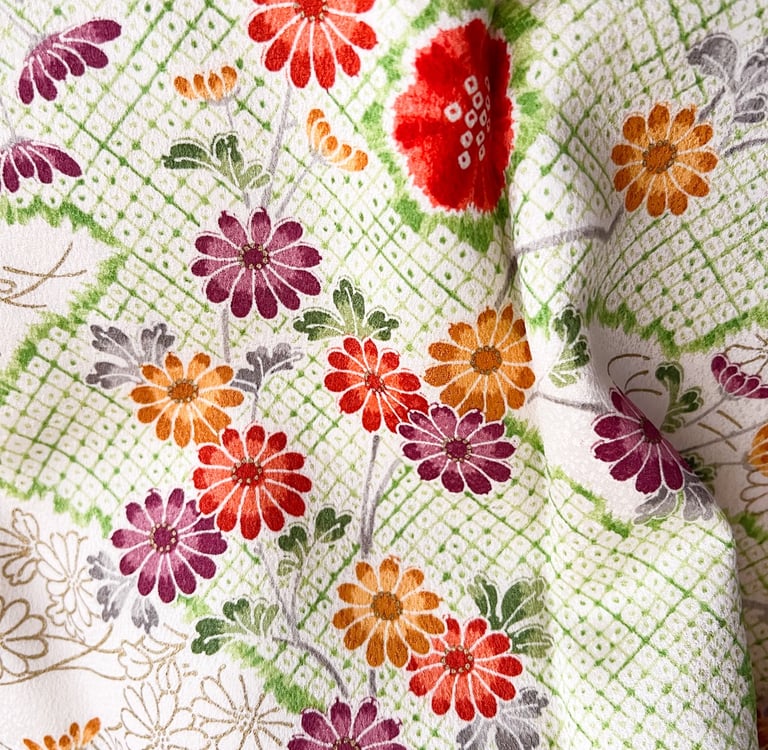
Peony -Botan
Peonies were specially loved by the royals and nobles in ancient Chinese cultures. Peony signifies nobility and sincerity.
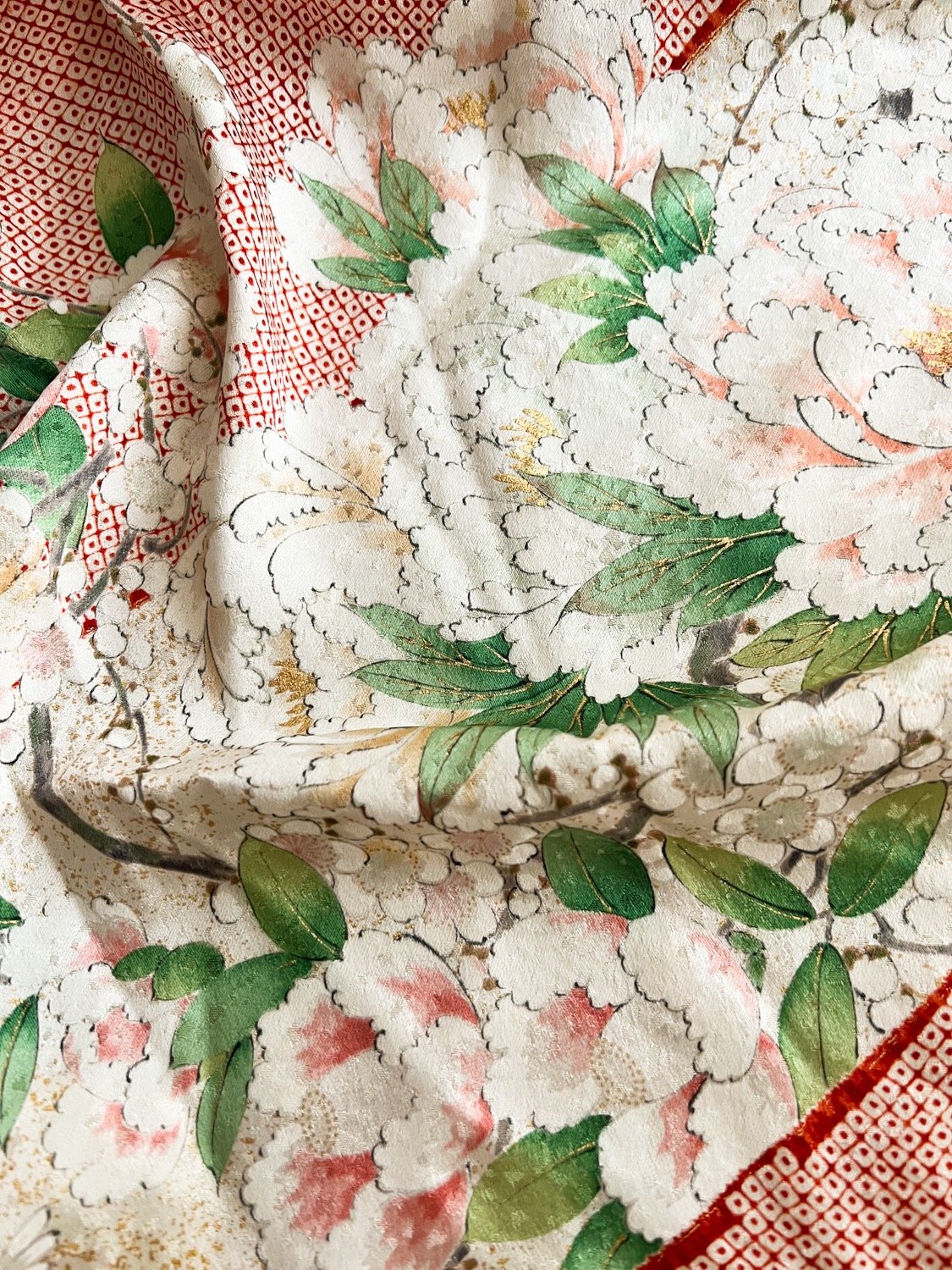
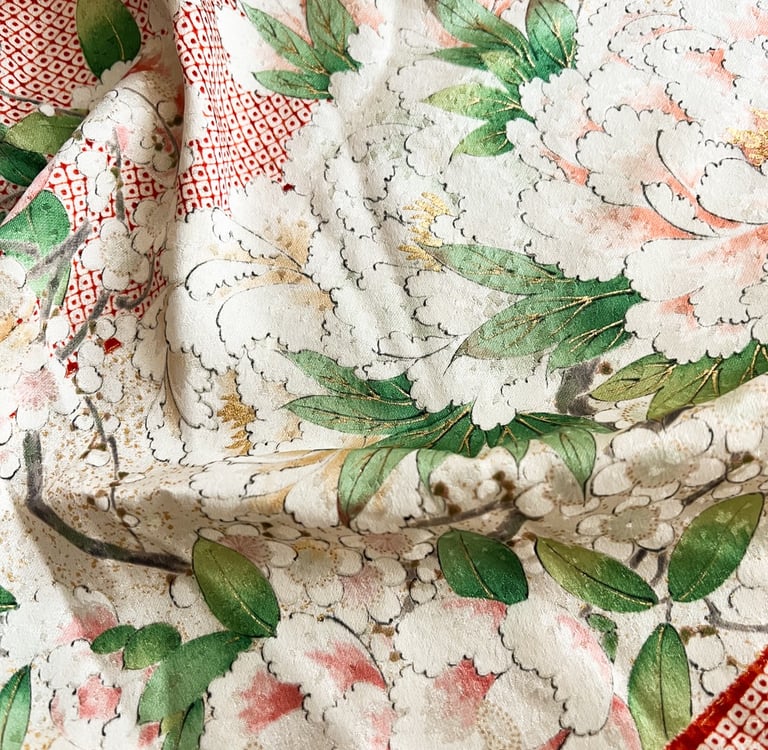
Peony printed vintage Kimono silk kinchaku by KIMONO KOMONO
Butterfly -Chou
Butterfly is one of few insect motif appearing on Kimonos. It signifies success and immortality.
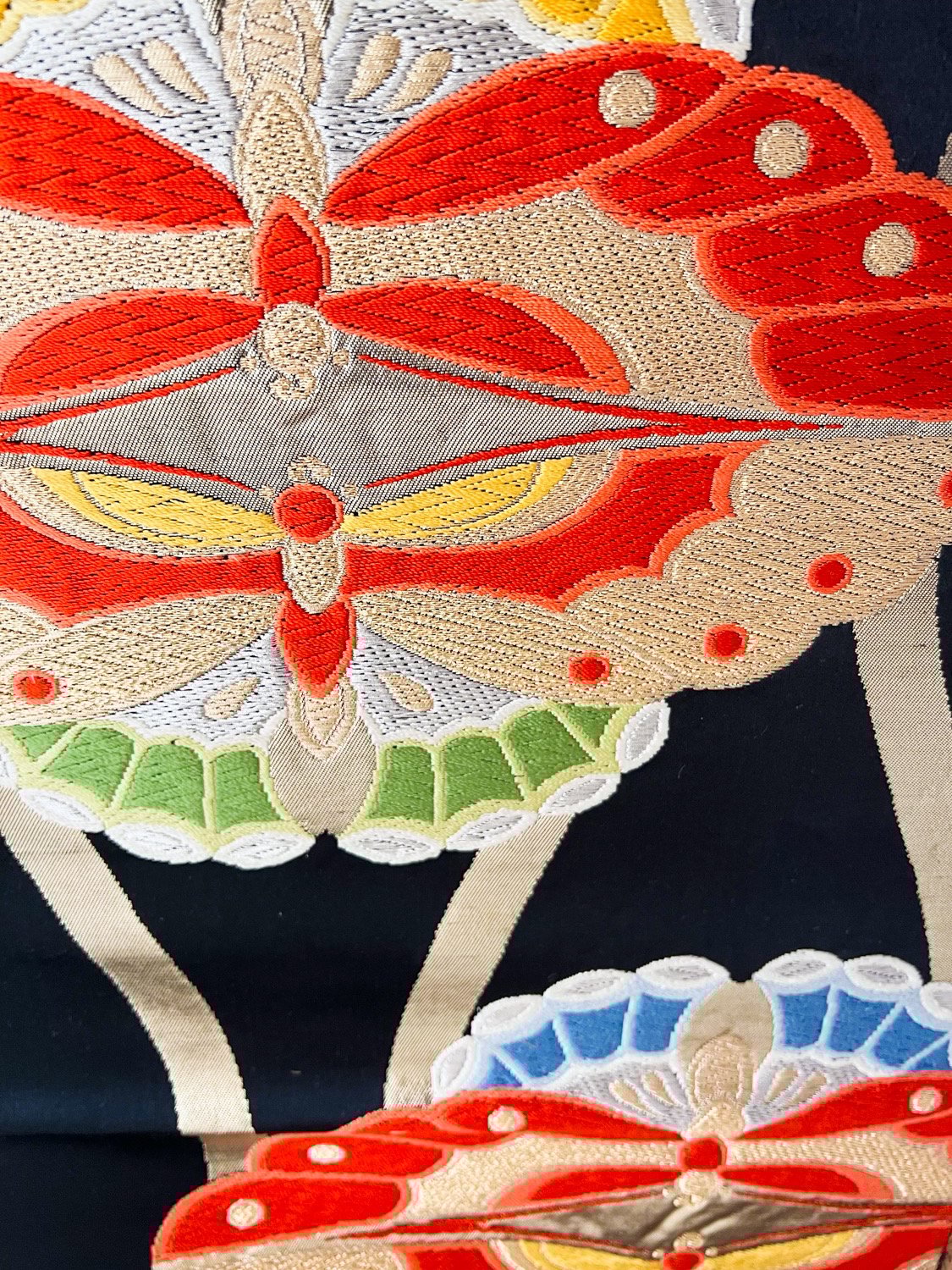
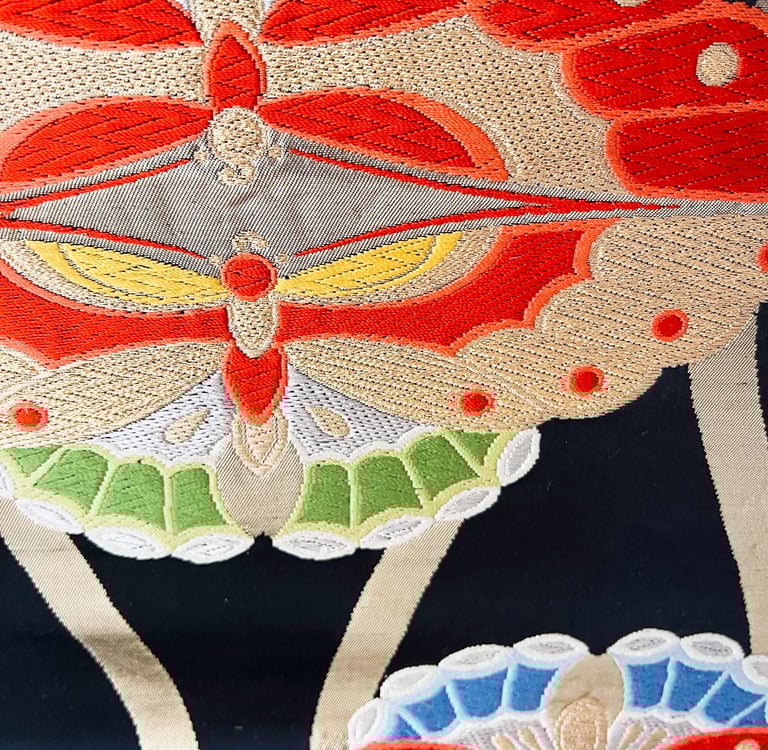
Peafowl -Kujaku
Peafowls eat venomous snakes and toxic plants without apparent harm to themselves, so they are believed to repel negative energy. Peacocks are also used as a symbol of fertility.
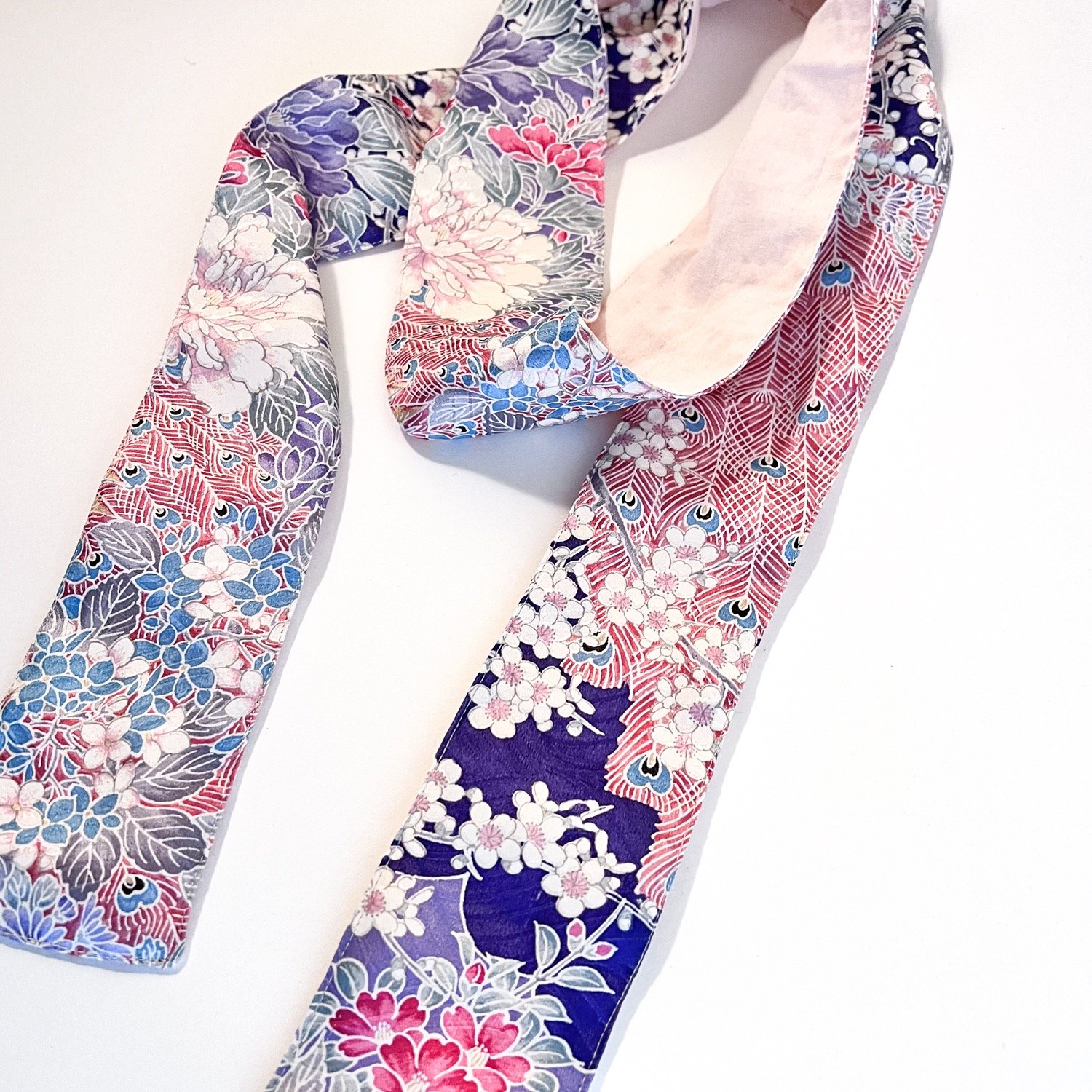
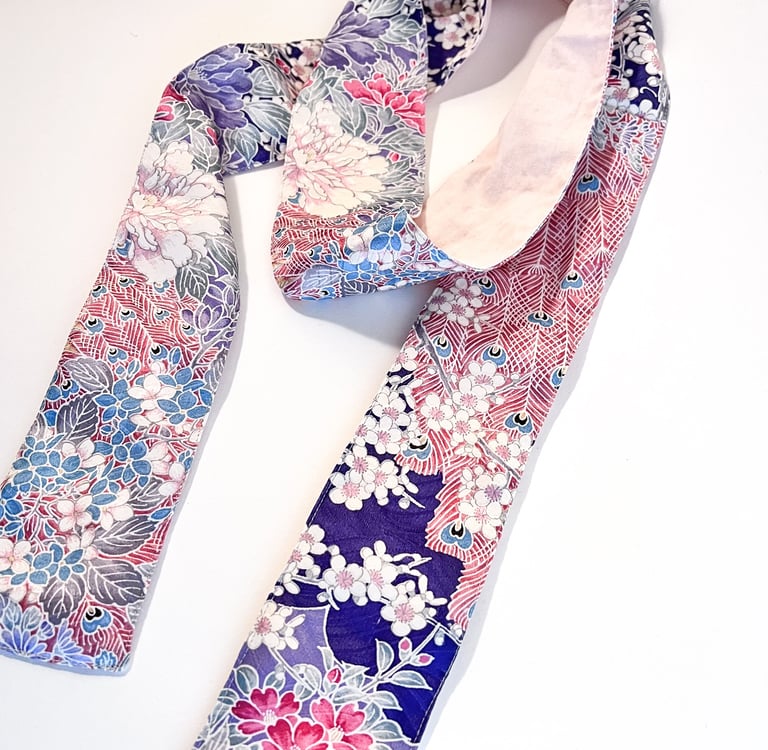
Peacock feather printed vintage Kimono silk scarf by KIMONO KOMONO
Because of its shape which is wider at one end, it signifies good luck, prosperity, and development. Hence it is a pattern often seen on Kimonos worn on celebratory occasions.
Open Fan -Oogi / Senmen
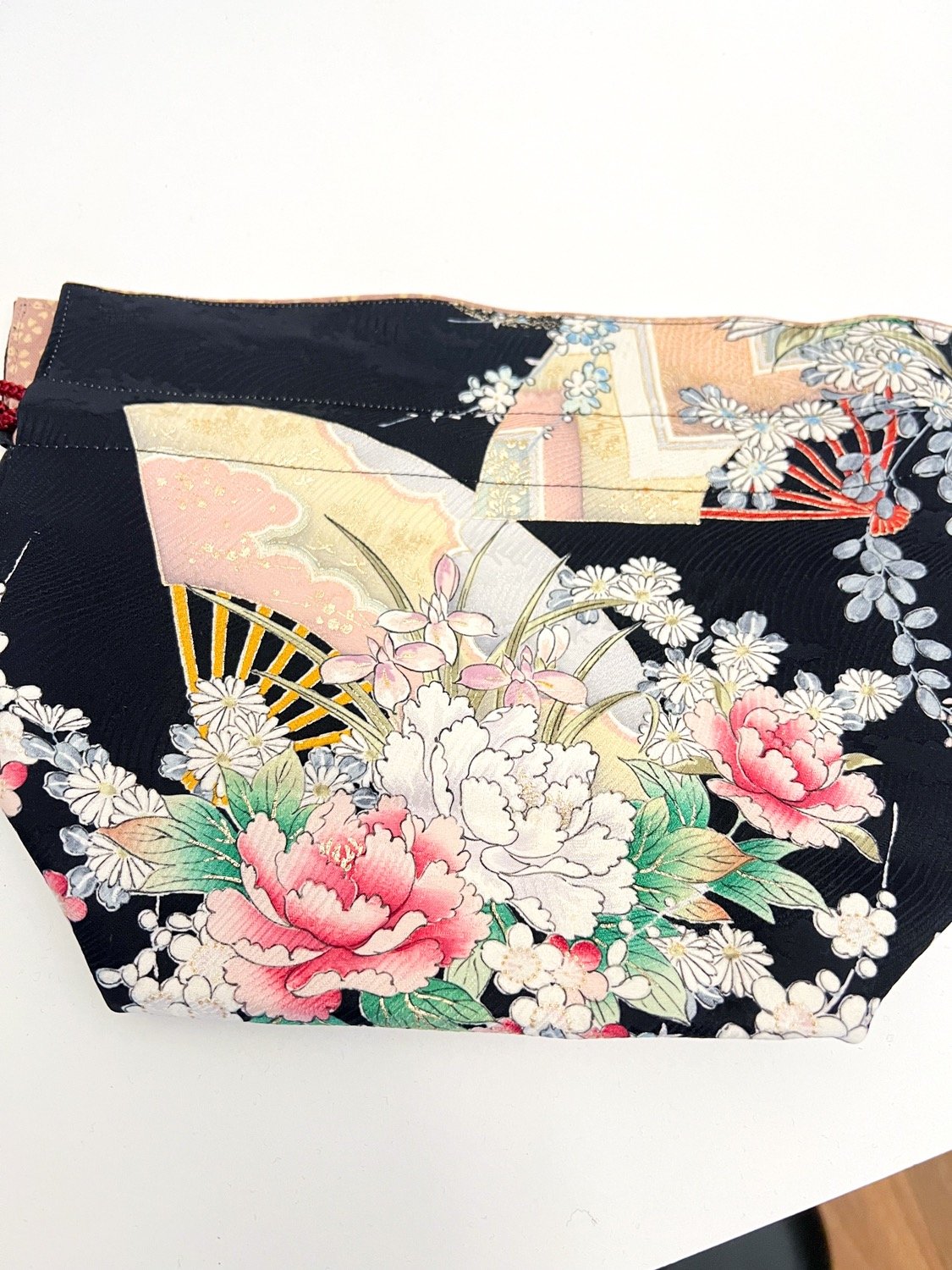
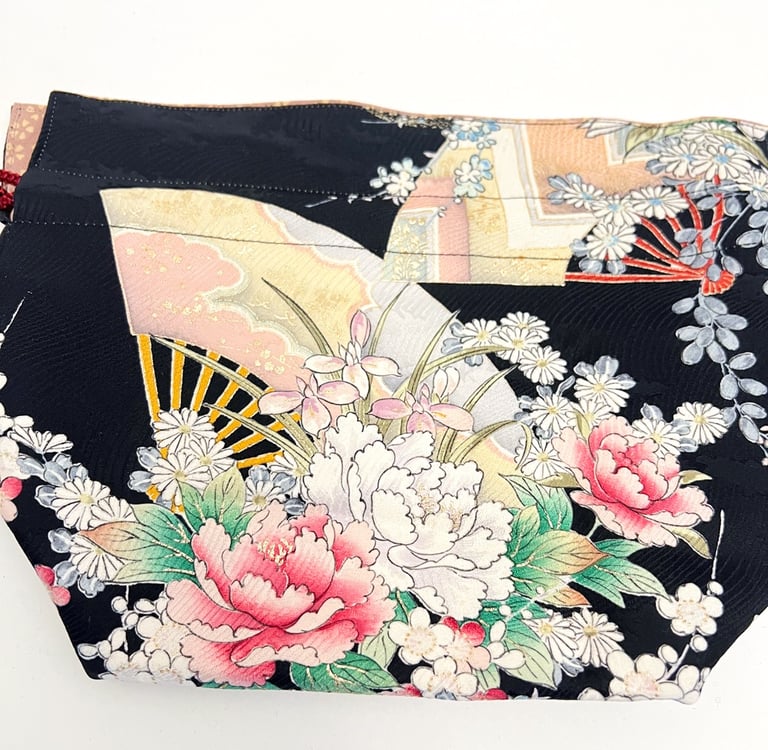
Fan printed vintage silk Kimono kinchaku by KIMONO KOMONO
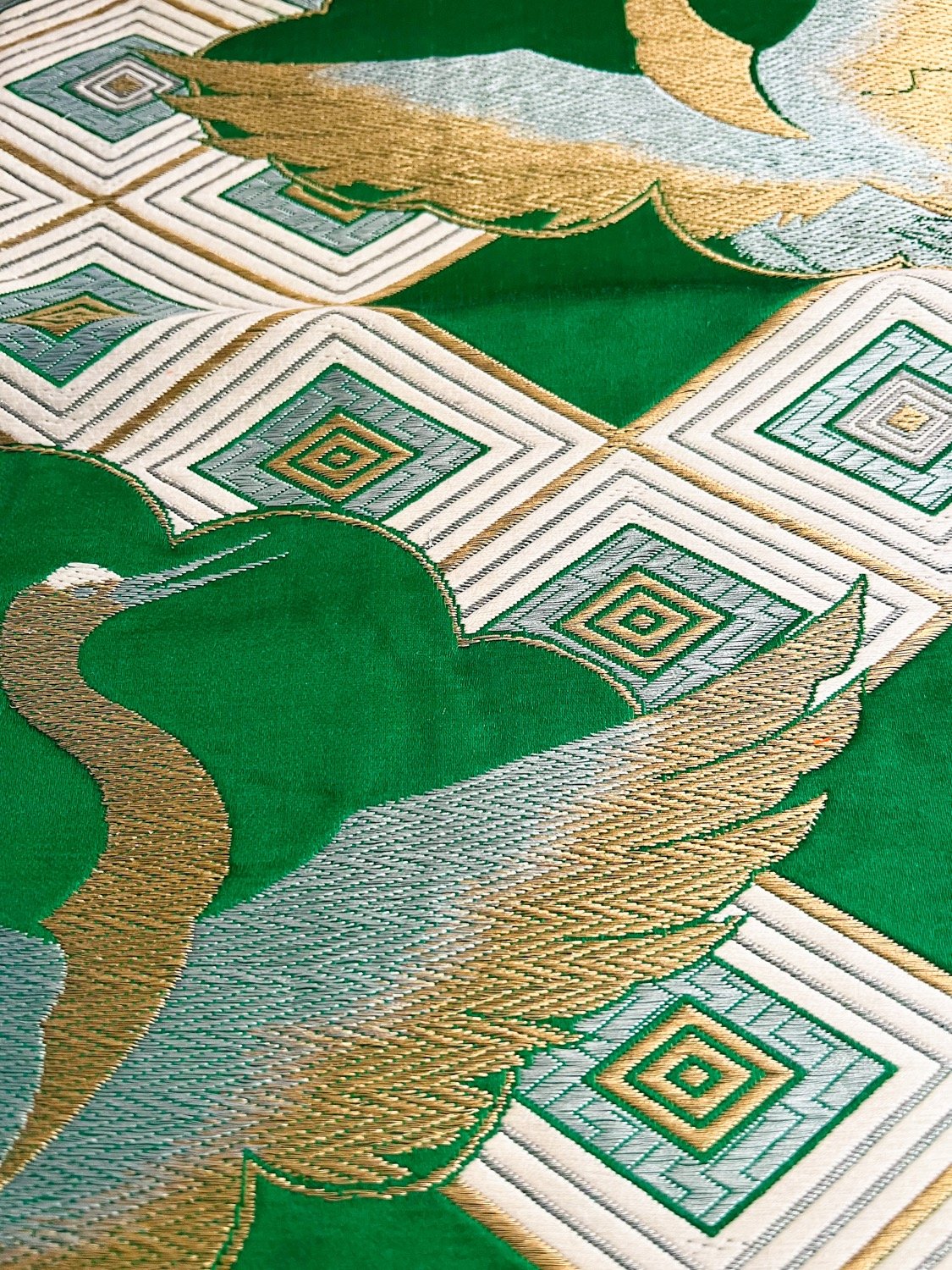
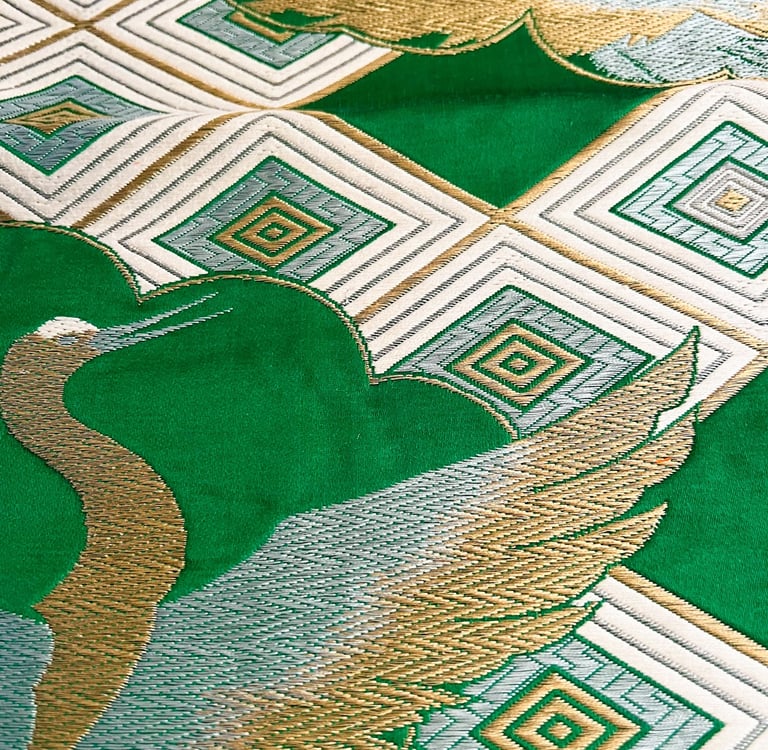
Crane -Tsuru
Crane is an auspicious symbol with meanings such as happy marriage and longevity. It is often seen at weddings.
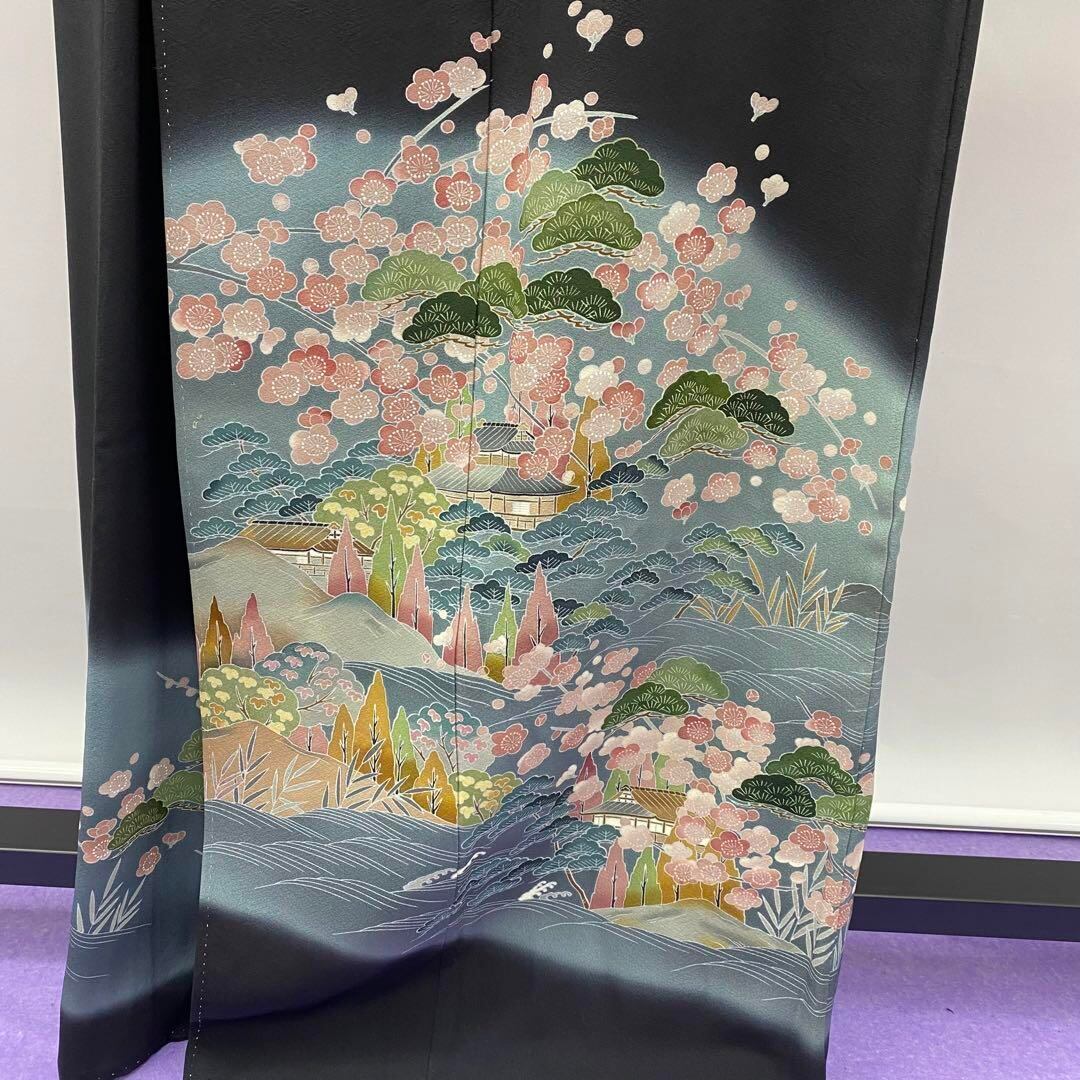
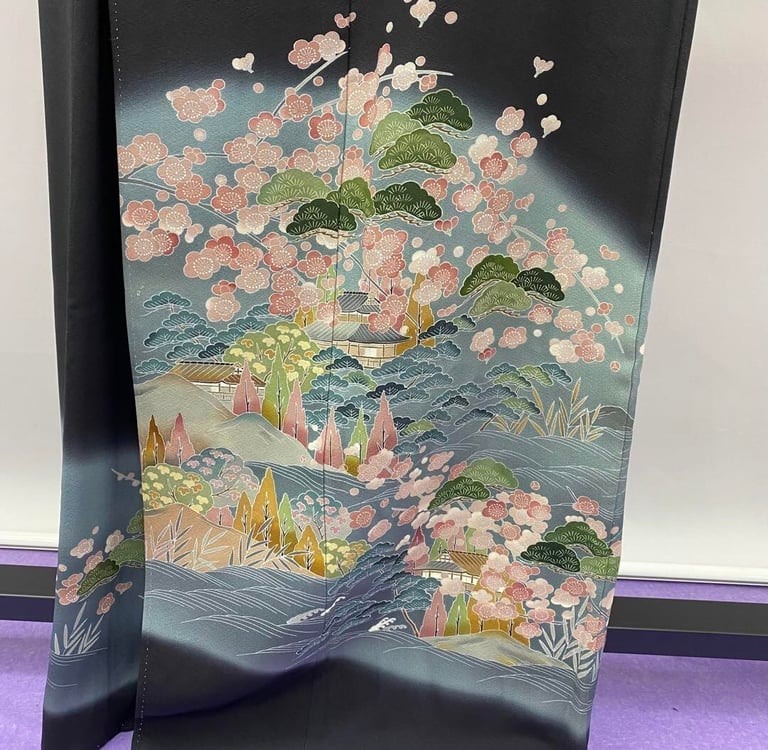
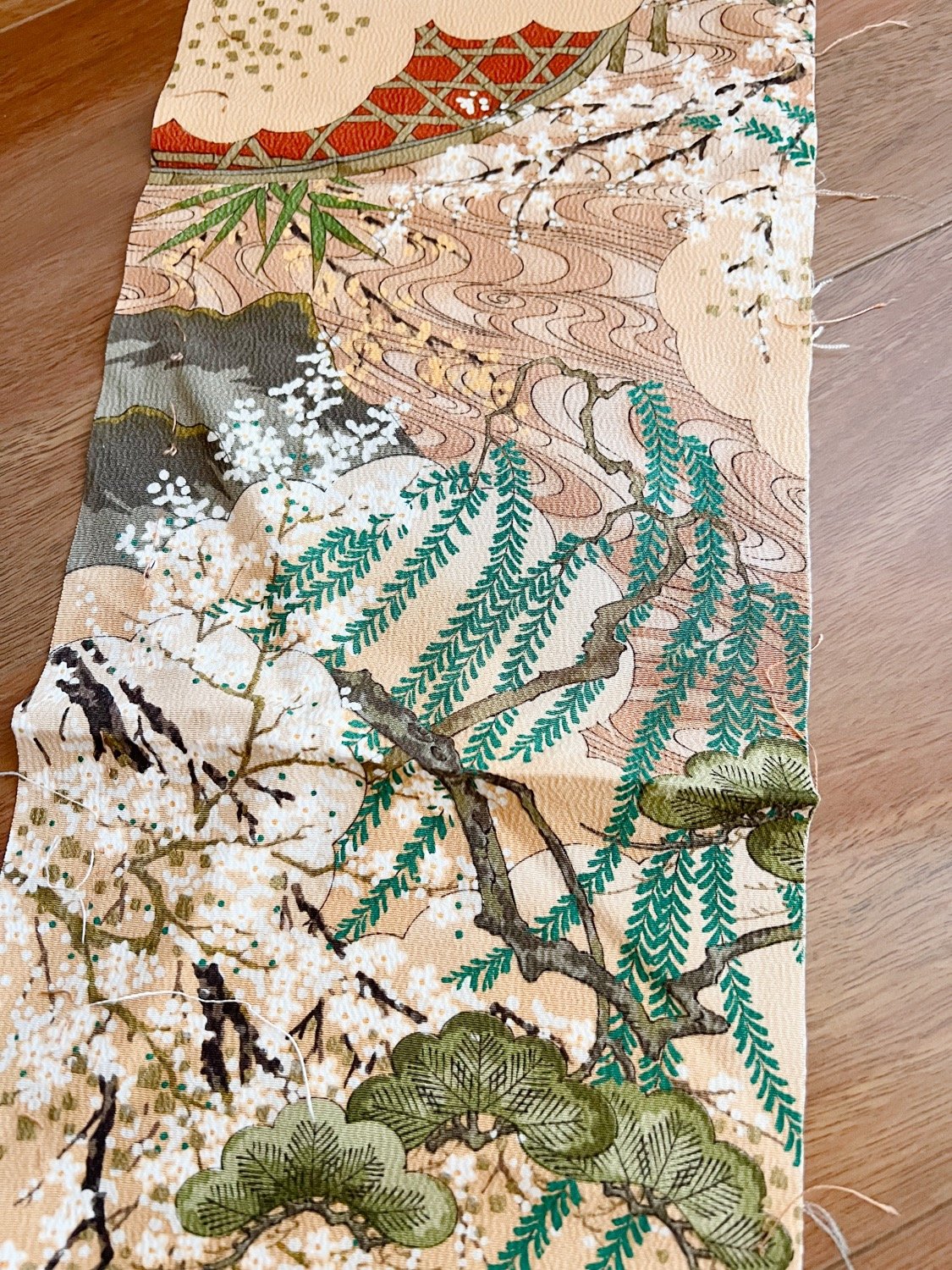
Pine, Bamboo, & Plum Trees -Shouchikubai
These are three plants that live through harsh winters. Pine signifies longevity, bamboo life force or growth, and plum (blossoms in winter) grace or elegance.
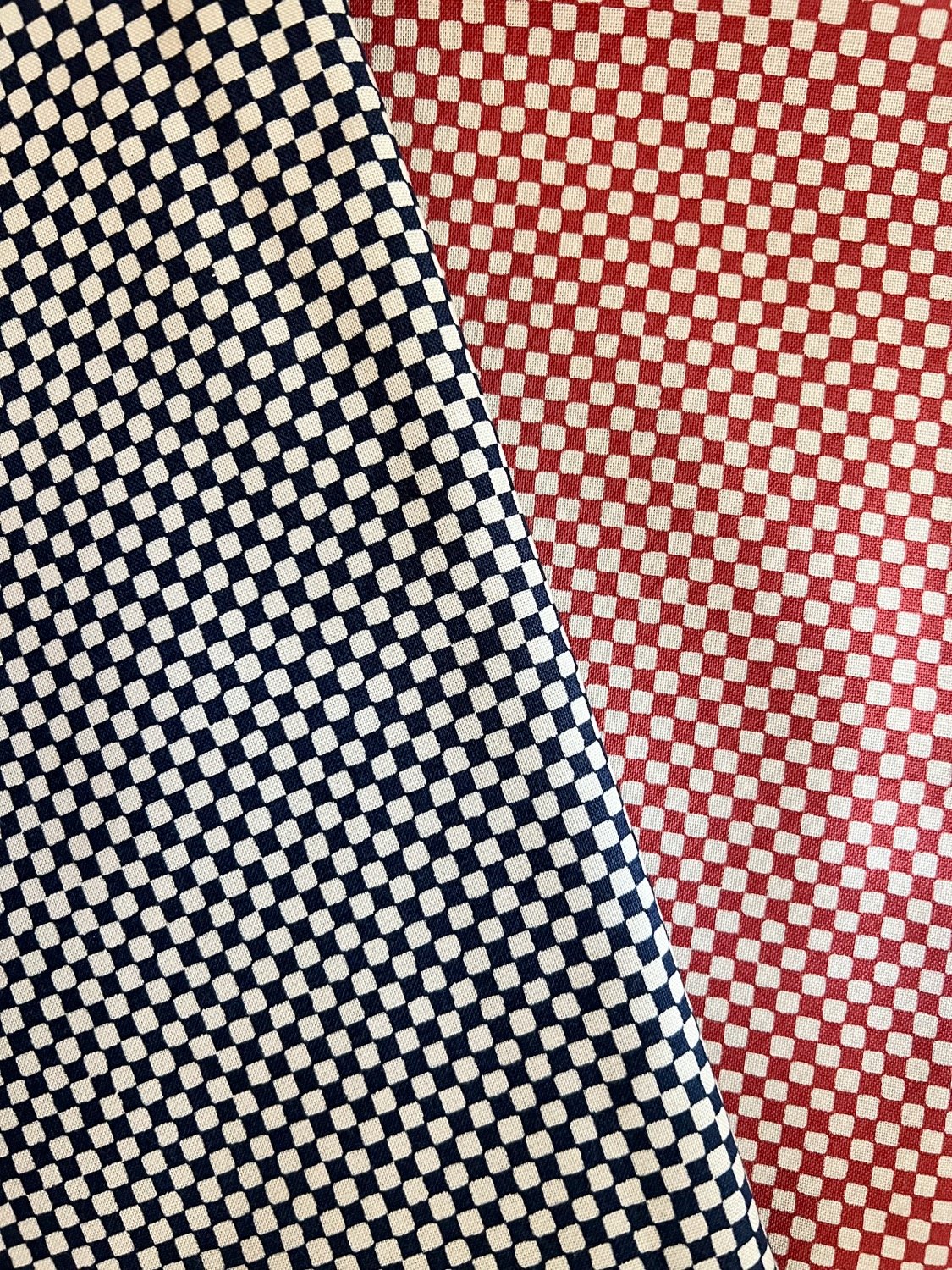
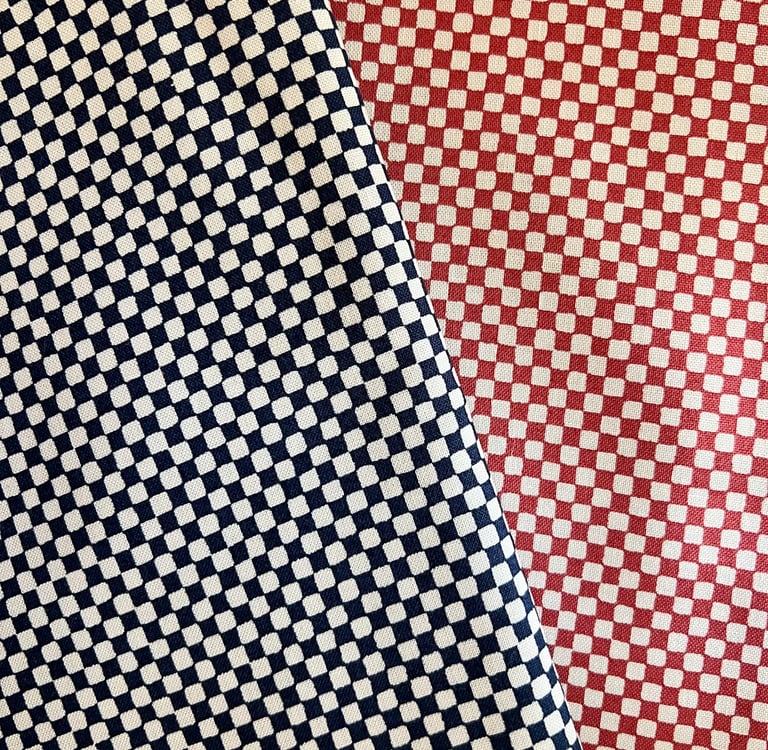
Checkered Pattern -Ichimatsu
Checkered pattern that goes on without a break symbolizes forever lasting, and prosperity.
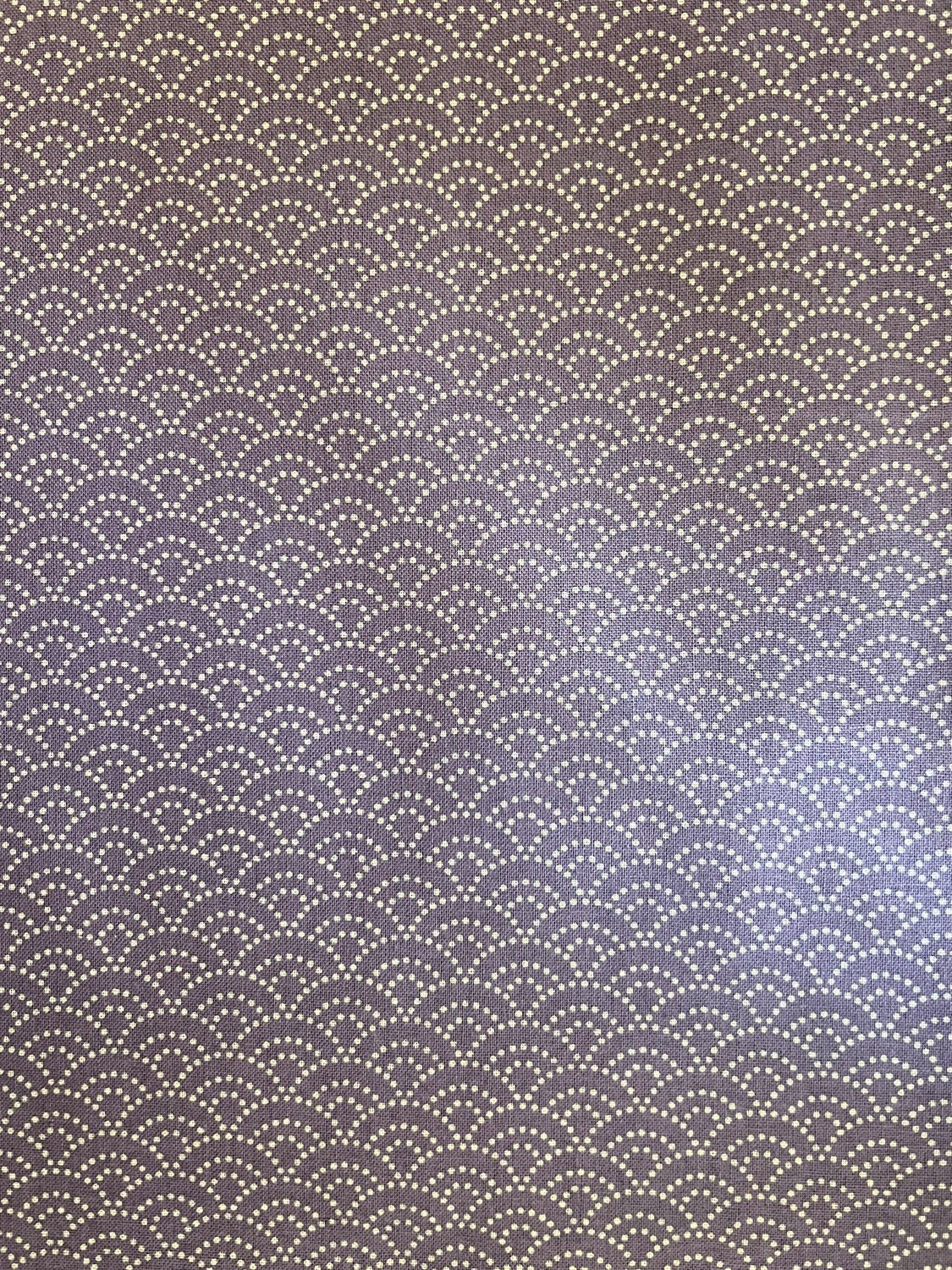
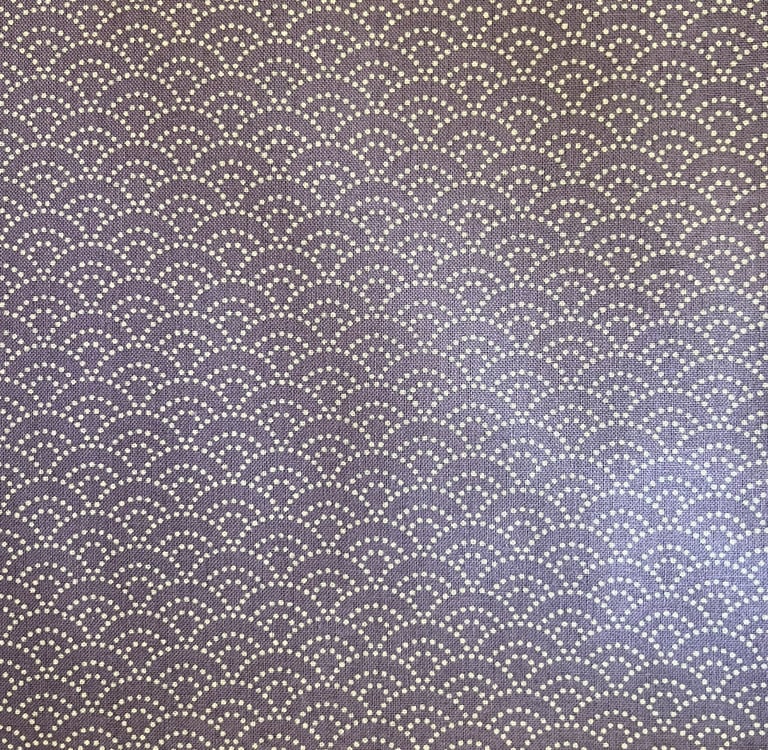
Geometric Waves -Seigaiha
Depicting ocean waves that goes on forever, it signifies everlasting happiness, or everlasting calm life.
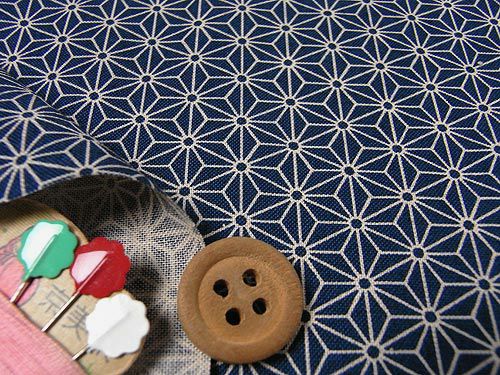
Hemp Leaves -Asanoha
Hemp is a plant that grows tall quickly. The pattern is also similar to scale pattern (Urokomon) which symbolizes to repel evil spirit, or to protect. Hemp pattern signifies healthy growth of child and protection.
Running Water -Ryusui
The running water pattern often seen in combination with other elements means pureness and repellent of evil or fire.
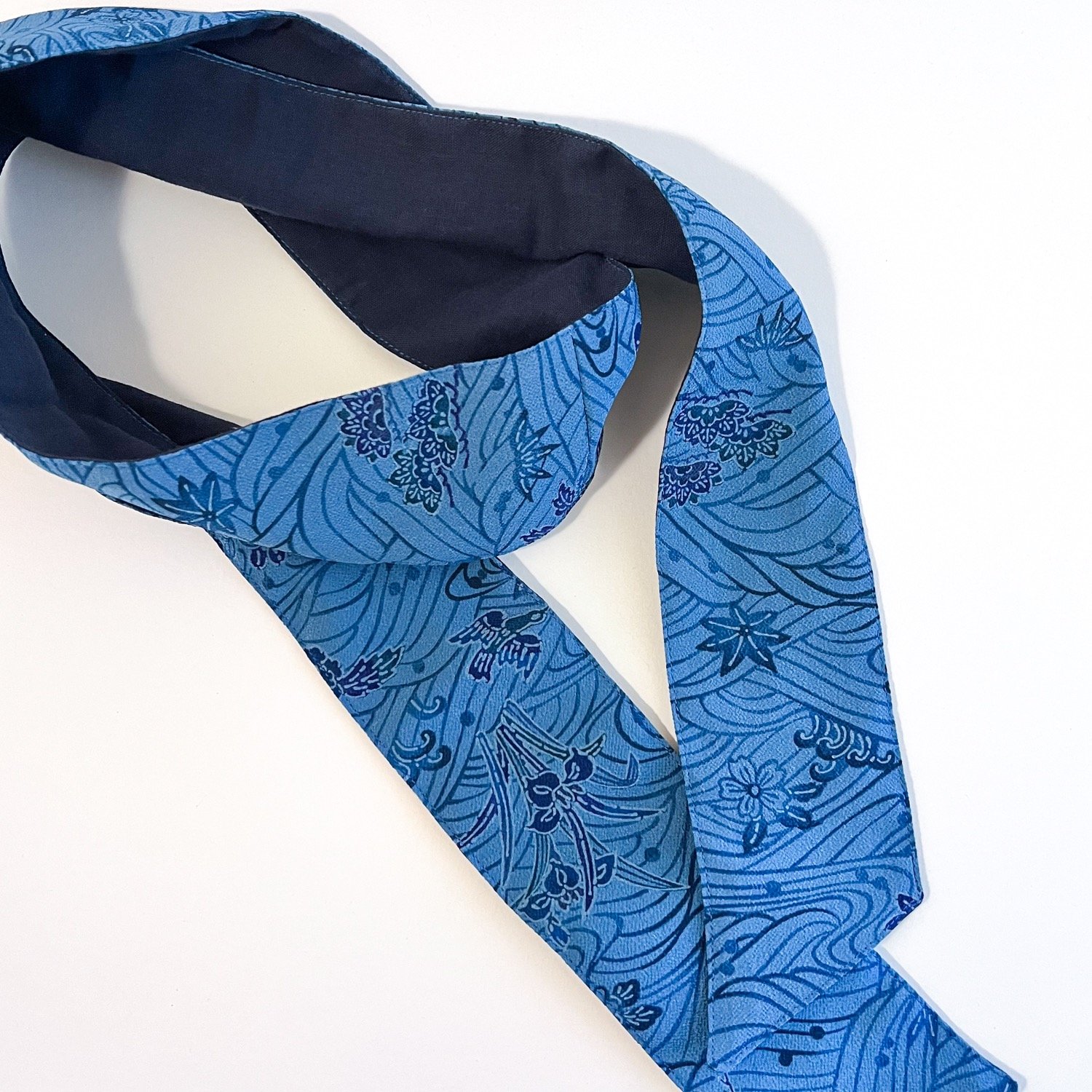
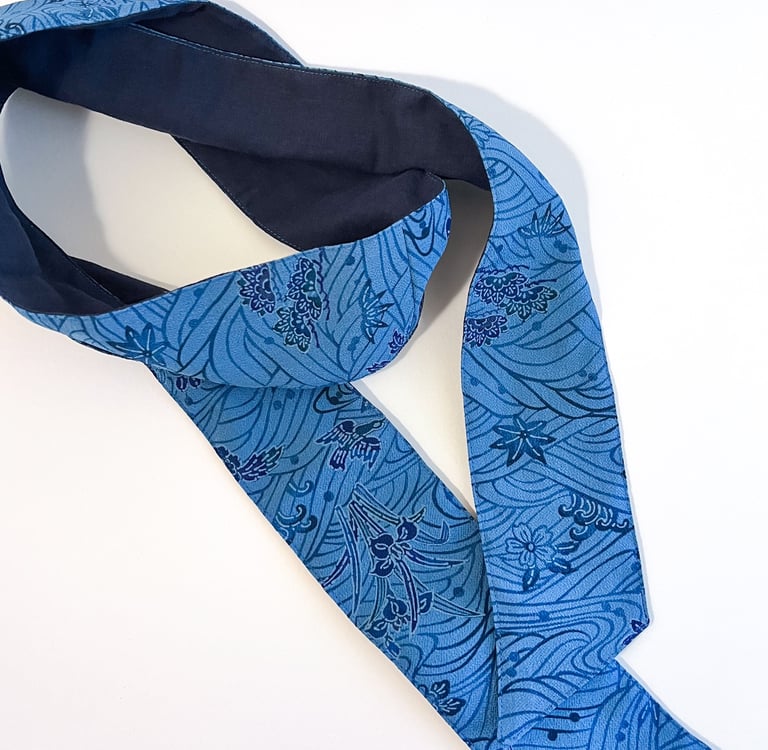
Blue crepe silk kimono scarf by KIMONO KOMONO
Basket Weaves -Kagome
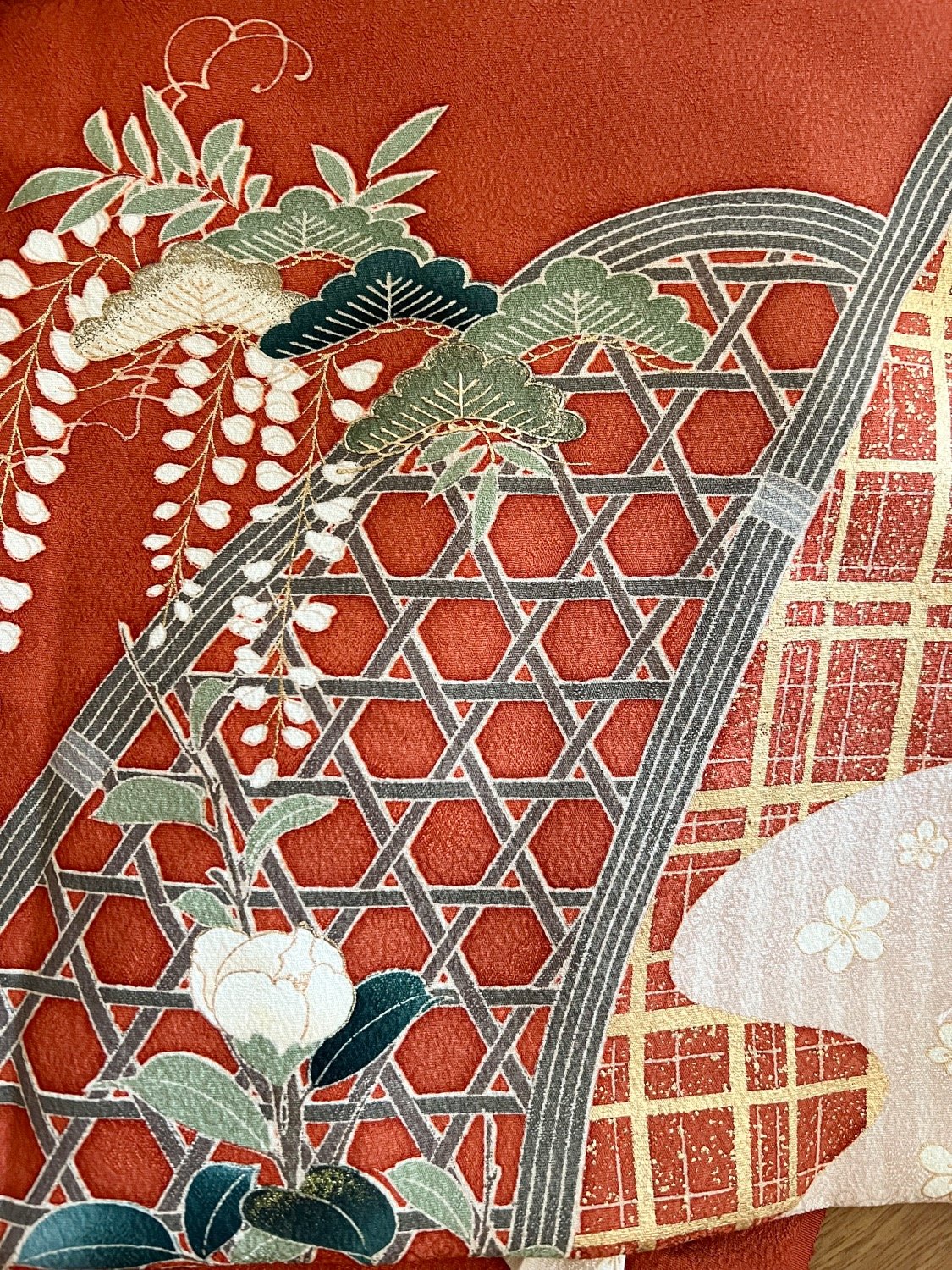
The basket weaves also looks like six-point-stars. Hence it is a symbol of evil / bad luck repellent and an invitation to good luck.
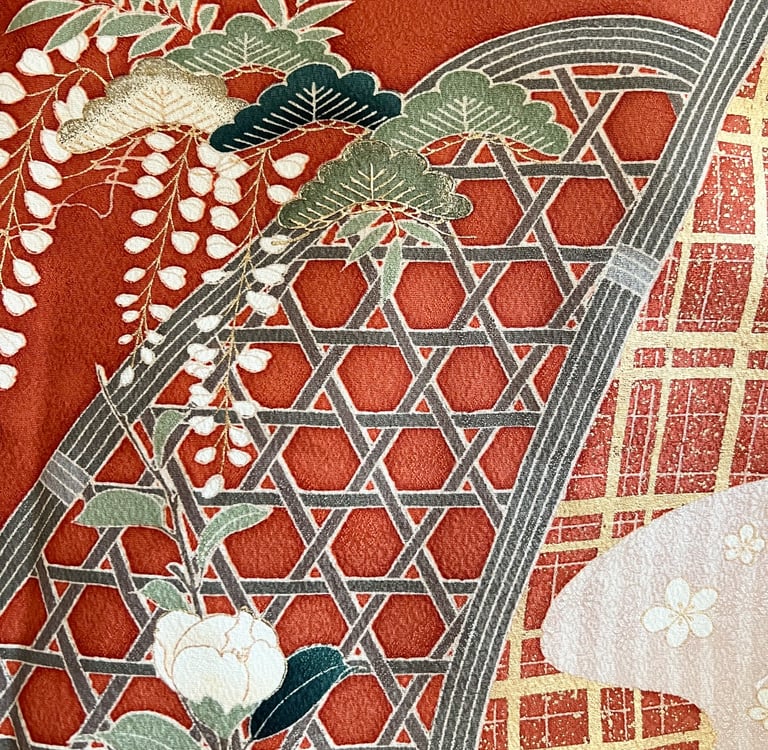
Auspicious Clouds -Zuiun
Clouds brought rain, and with it good harvest. Hence they were believed to be vessels for gods or mountain wizards. The Zuiun pattern symbolizes a positive omen.
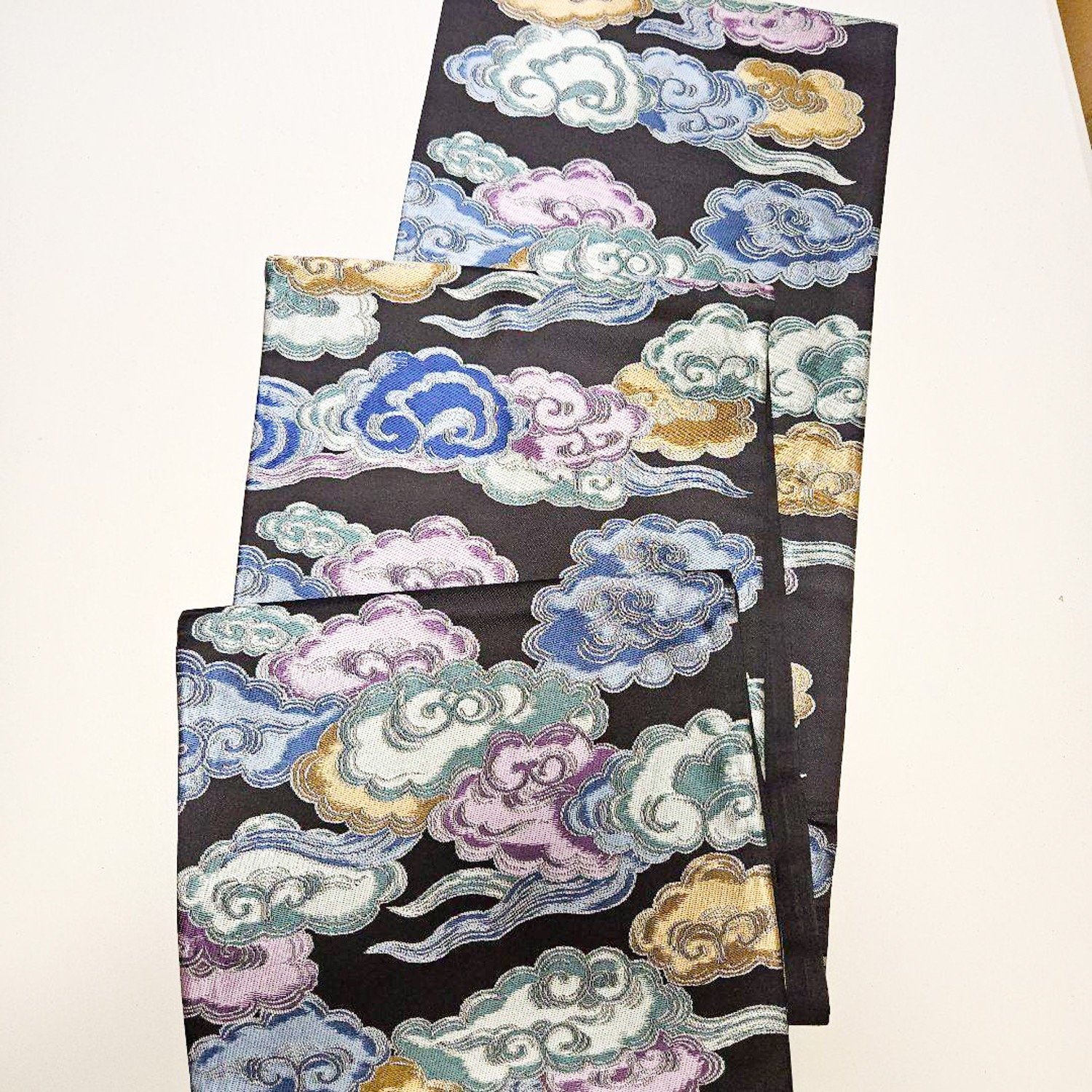
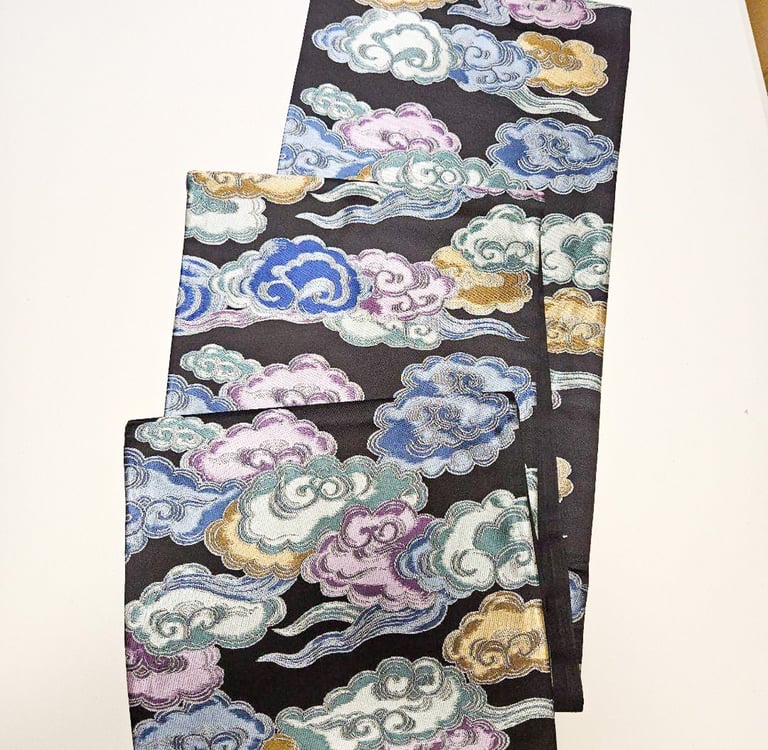
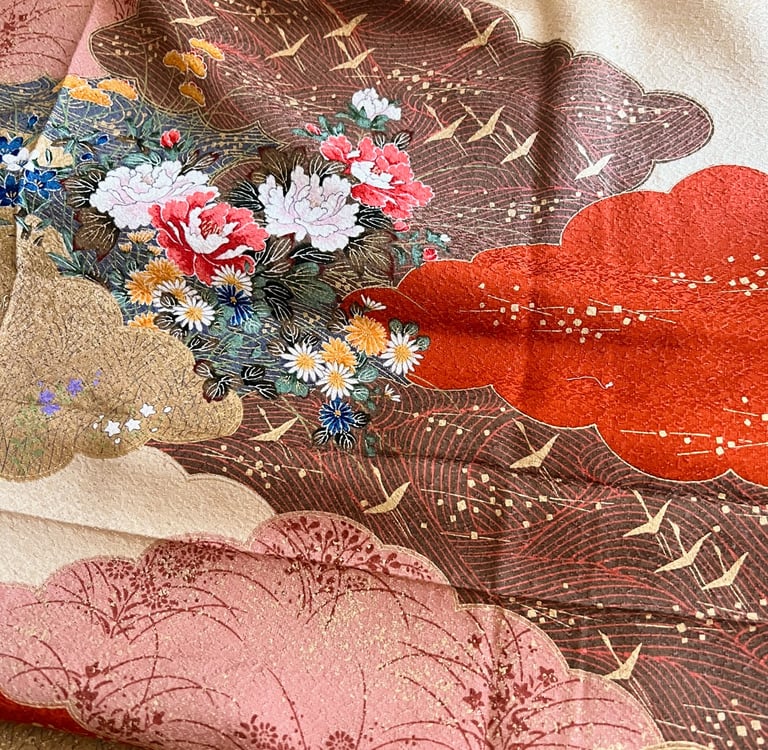
Floating Clouds -Kumotori
Different from Zuiun, Kumotori depicts clouds with various patterns inside them. As above, this is also a positive omen, and especially signifies carefree life and reincarnation.
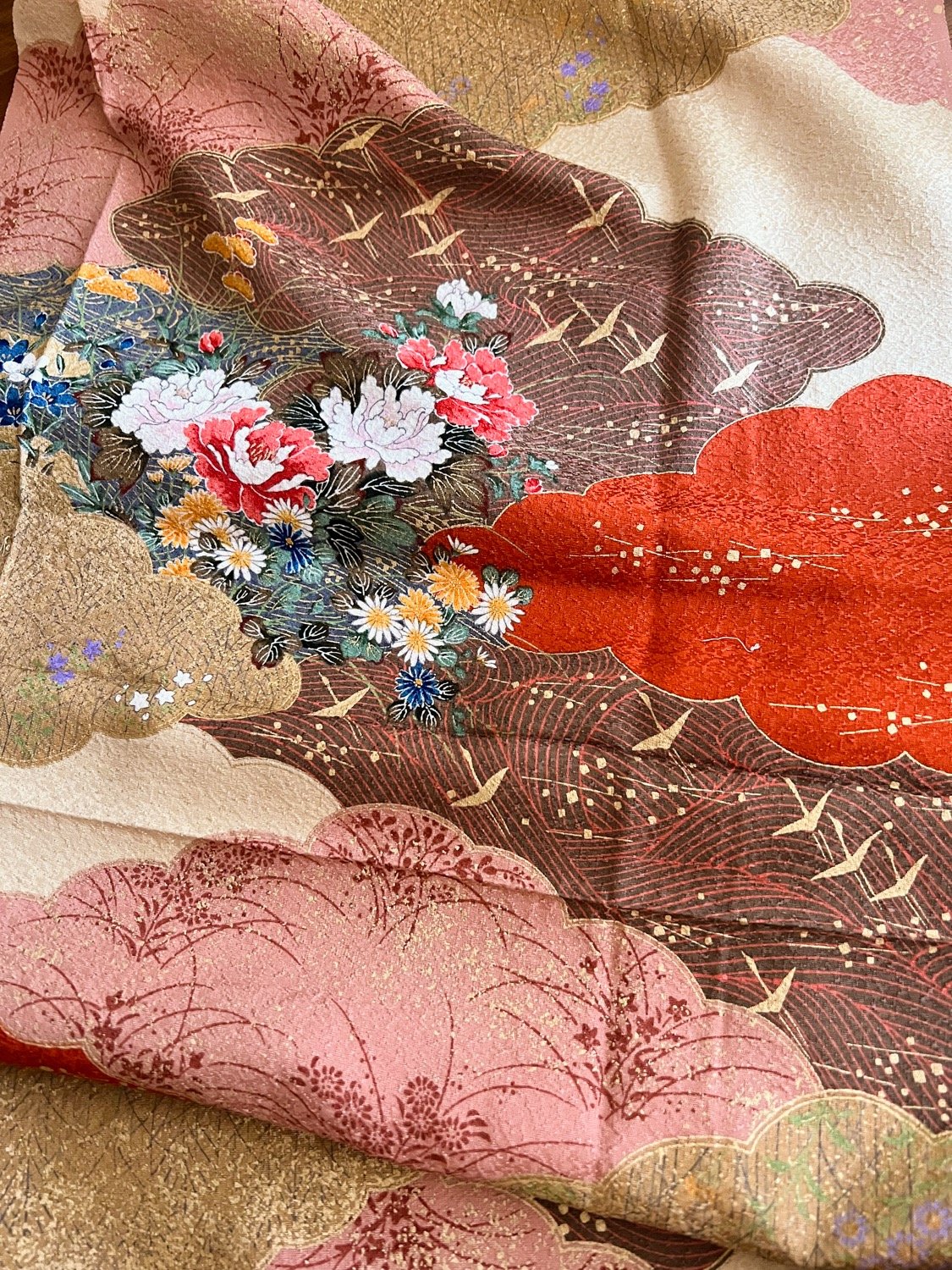
Turtle Shell -Kikkou
Combination patterns of different patterns are very common. Below is an example of combination pattern: this one has Shouchikubai (pine, bamboo, plum), Kagome (basket weave), Ryusui (running water), and Kumotori (floating clouds).
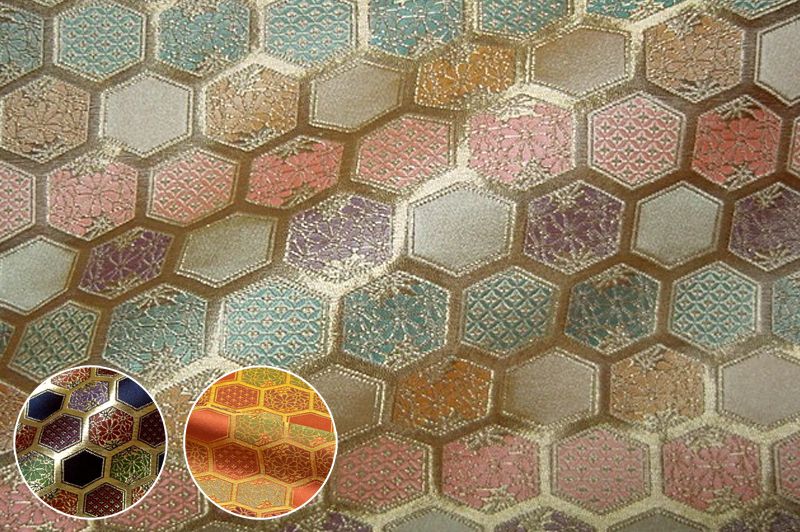
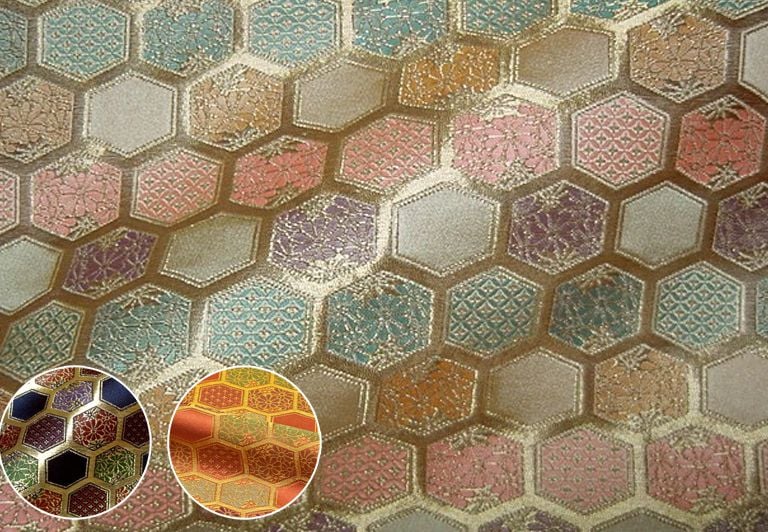
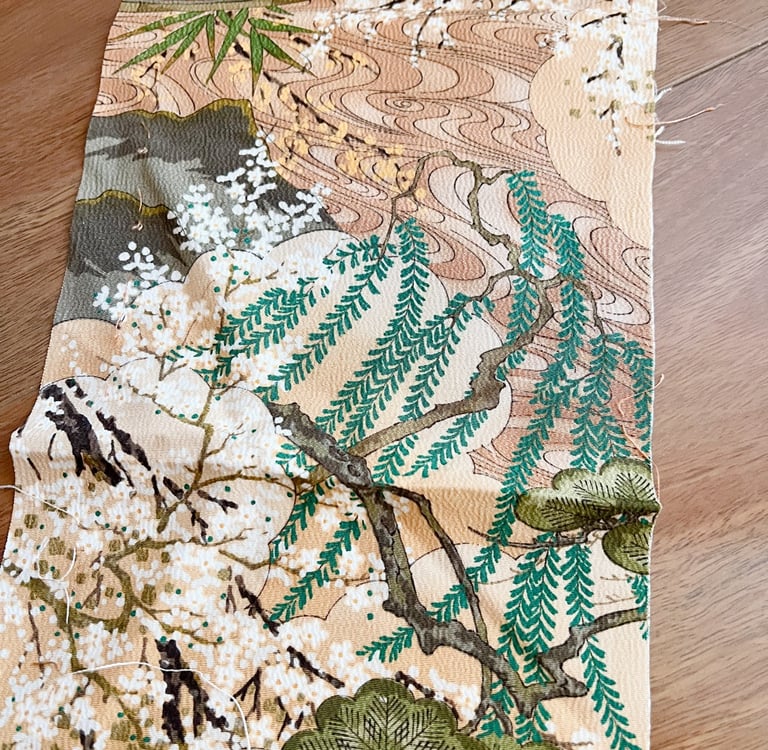
Kikkou is a depiction of turtle shell in continuous geometric pattern. It signifies longevity.
Combination Patterns
Stay in the Know
Keep up to date with new events and blogs.
CONTACT US
hello.kimono.komono@gmail.com